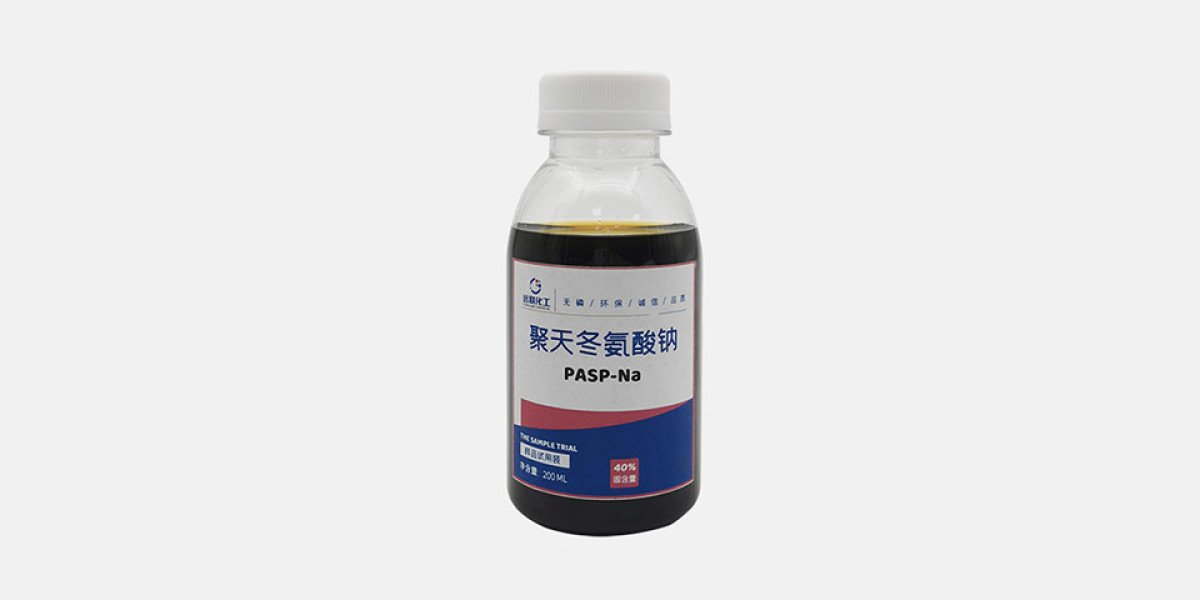

As environmental regulations tighten and green transformation becomes essential for corporate survival, polyaspartic acid (PASP) has moved from the laboratory to the forefront of industrial water treatment, emerging as the most competitive green alternative to traditional phosphorus-based water treatment agents. This represents not merely a technological upgrade but a fundamental shift in the philosophy of industrial water management.
01 Nature's Wisdom, Industry's Solution
The inspiration for polyaspartic acid comes from one of nature's simplest insights—how marine mollusks thrive in environments free from mineral deposition. Scientists extracted this inspiration to create, through biomimetic synthesis, this water treatment polymer whose structure and performance closely resemble natural systems.
Unlike synthetic polymers derived from petroleum, polyaspartic acid's core raw material comes from natural amino acids, with a backbone structure highly similar to proteins. This bio-homology grants it two revolutionary advantages: exceptional biocompatibility and the ability to degrade completely in the environment.
When we compare polyaspartic acid with mainstream traditional water treatment agents, its environmental advantages become immediately apparent:
| Evaluation Dimension | Polyaspartic Acid (PASP) | Phosphorus-Containing Scale/Corrosion Inhibitors (ATMP/HEDP) | Synthetic Polymers (HPMA/PAA) |
|---|---|---|---|
| Environmental Persistence | >60% biodegradation in 28 days, ultimately decomposing to CO₂, water, and minimal biomass | Difficult to degrade, persists long-term in water bodies | Slow degradation, may produce microplastic precursors |
| Eutrophication Risk | Phosphorus-free formulation, completely avoids water eutrophication | High phosphorus content, primary contributor to eutrophication | Typically requires compounding with phosphorus agents, indirectly contributing to phosphorus load |
| Biotoxicity | Practically non-toxic to fish, algae, microorganisms (EC50 > 1000 mg/L) | Moderate toxicity, affects aquatic reproduction | Low toxicity, but degradation intermediates may have unknown effects |
| Metal Ion Chelation Capacity | Strong chelation, especially for Ca²⁺, Mg²⁺ (logK > 6) | Very strong chelation but poor selectivity | Moderate chelation capacity, easily affected by pH |
| Scale Inhibition Mechanism | Lattice distortion + threshold effect, scale inhibition rate up to 100% | Primarily threshold effect, typically <80% inhibition | Mainly dispersion, limited effect on hard scale |
02 Not Just Replacement, But Comprehensive Advancement
Polyaspartic acid is most commonly misunderstood as merely an "eco-friendly version of phosphorus-based water treatment agents." In reality, it delivers dual improvements in both performance and environmental protection.
"Intelligent" Scale Inhibition Mechanism
The regularly spaced carboxyl groups on the molecular chain of polyaspartic acid can dynamically complex with scaling cations (Ca²⁺, Mg²⁺, etc.). This complexation not only prevents crystal nucleation but uniquely embeds itself into growing crystal lattices, causing lattice distortion that results in loose scale formations easily removed by water flow. In practical industrial applications, this characteristic extends heat exchanger cleaning cycles from 3-6 months to 2-3 years.
Adaptive Corrosion Protection
Unlike conventional corrosion inhibitors that require strict concentration control to form complete protective films, polyaspartic acid creates multi-layered dynamic protective films on metal surfaces. Even during water quality fluctuations or temporary insufficient chemical concentration, this protective film maintains basic anti-corrosion functions through molecular rearrangement. Comparative data from a petrochemical enterprise shows that after implementing a polyaspartic acid system, the annual corrosion rate of carbon steel decreased from 0.125 mm/y to 0.025 mm/y—five times better than national standards.
Synergistic Enhancement Platform
The molecular structure of polyaspartic acid provides abundant modification sites, enabling synergistic effects with various green water treatment components:
Compounding with plant-extracted corrosion inhibitors can increase corrosion inhibition efficiency by over 40%
Combination with biodegradable zinc salts enhances pitting protection without increasing environmental burden
Formulation with natural dispersants achieves stable dispersion of suspended solids, preventing deposition
03 Industrial Application Panorama: From Circulating Water to Zero Liquid Discharge
High Concentration Ratio Circulating Water Systems
In water-scarce northern regions, increasing circulating water concentration ratios is crucial for water conservation, but scaling and corrosion problems from high salinity limit this technology. Polyaspartic acid, with its exceptional calcium tolerance (capable of treating water with Ca²⁺ concentrations exceeding 1000 mg/L), makes it possible to increase concentration ratios from 3-5x to 8-10x, directly reducing makeup water by 30-40%.
Reverse Osmosis System Guardian
Reverse osmosis membranes are extremely sensitive to scaling, and residual traditional scale inhibitors may affect membrane performance. The non-oxidizing, residue-free characteristics of polyaspartic acid make it ideal for membrane system pretreatment and cleaning. Operational data from a seawater desalination plant shows that after using polyaspartic acid-based scale inhibitors, membrane cleaning frequency decreased from monthly to quarterly, while salt rejection remained above 99.7%.
The Final Piece in Zero Liquid Discharge Systems
In Zero Liquid Discharge (ZLD) systems, terminal evaporative crystallizers face severe scaling issues. Polyaspartic acid maintains scale inhibition effectiveness in high-salinity, high-temperature environments (up to 150°C), ensuring stable ZLD system operation. This application is particularly important for industries facing strict discharge limitations, such as coal chemical and pharmaceutical manufacturing.
Special Water Quality Adaptation Cases
High silica water: Effectively inhibits silica scale formation, allowing SiO₂ concentrations up to 300 mg/L without scaling
High iron water: Stabilizes iron ions in water, preventing red water problems caused by Fe(OH)₃ deposition
High barium/strontium water: Shows significant inhibition against insoluble scales like barium sulfate and strontium sulfate
04 Economic Analysis: Green Doesn't Mean Expensive
In the early promotion stages of polyaspartic acid, price was often perceived as the main barrier. However, full lifecycle cost analysis reveals a different picture:
Direct Cost Comparison
| Cost Item | Traditional Phosphorus-Based Approach | Polyaspartic Acid Approach | Difference Analysis |
|---|---|---|---|
| Chemical Cost (per ton of water) | 0.15-0.25 | 0.18-0.30 | Polyaspartic acid 20% higher |
| Wastewater Treatment Cost | High (requires phosphorus removal) | Very low (no phosphorus discharge) | Polyaspartic acid approach 60-80% lower |
| Equipment Cleaning Cost | High (frequent cleaning) | Low (extended cleaning cycles) | Polyaspartic acid approach 70% lower |
| Energy Consumption Cost | High (scaling reduces thermal efficiency) | Low (maintains high thermal efficiency) | Polyaspartic acid approach 15-25% lower |
| 3-Year Total Cost | 100 (baseline) | 85-90 | Polyaspartic acid approach 10-15% lower |
Indirect Benefit Enhancements
Production Continuity: Reduced downtime for cleaning, improved facility utilization
Equipment Lifespan: Extended service life of heat exchangers, piping and other critical equipment by 30-50%
Regulatory Risk: Complete avoidance of fines and production stoppages due to phosphorus discharge exceedances
Corporate Image: Green water treatment solutions become highlights in corporate sustainability reports
05 Shandong Yuanlian Chemical: China's Innovation in Polyaspartic Acid
In this wave of green transformation, Shandong Yuanlian Chemical Co., Ltd. has evolved from follower to innovator. The company has not only established a 10,000-ton annual production capacity for polyaspartic acid but has also achieved breakthroughs in molecular structure customization.
Product Matrix Innovation
Yuanlian Chemical has developed polyaspartic acid series products tailored to different water qualities and process conditions:
PASP-1 Series: High scale inhibition type, suitable for high hardness, high alkalinity water
PASP-2 Series: High corrosion inhibition type, targeting low hardness corrosive water
PASP-3 Series: High temperature resistant type, specifically designed for thermal systems
PASP-4 Series: Biodegradable dispersant type, for suspended solids control systems
Application Technical Support
Yuanlian Chemical's technical service team provides comprehensive support from water quality analysis and program design to operational optimization. The company's developed intelligent dosing system automatically adjusts chemical dosage based on online monitoring data, reducing chemical consumption by 15-25% while ensuring effectiveness.
Industry-Customized Solutions
Developed high-temperature resistant, oxidation-resistant specialized formulations for the power industry
Designed corrosion inhibition solutions with better process media compatibility for the petrochemical industry
Provided low-dosage products effective even in low-temperature environments for the textile industry
06 The Future is Here: Intelligent Evolution of Polyaspartic Acid
The water treatment industry is transitioning from "experience-driven" to "data-driven," and polyaspartic acid technology continues to evolve within this trend.
Intelligent Responsive Polyaspartic Acid
Yuanlian Chemical's R&D team is developing intelligent polyaspartic acid derivatives capable of automatically adjusting molecular conformation based on water quality changes. This material maintains a linear structure under normal conditions, functioning as a dispersant; when increased scaling tendency is detected, the molecular chain coils, exposing more chelation sites and enhancing scale inhibition.
IoT-Integrated Systems
Integrating polyaspartic acid dosing systems with factory IoT platforms enables:
Real-time monitoring of corrosion rates and scaling trends at critical points
Machine learning algorithm-based prediction of optimal dosing strategies
Automatic generation of water treatment effectiveness reports and compliance documentation
Green Supply Chain Certification
As supply chain transparency requirements increase, polyaspartic acid's natural raw material sources and low-carbon production processes are becoming new competitive advantages. Yuanlian Chemical has initiated product carbon footprint certification, providing customers with third-party-verified environmental data.
Every plume of white mist rising from cooling towers tells a story of redefined relationships between industry and nature. The widespread adoption of green water treatment technologies like polyaspartic acid marks a fundamental shift in industrial water treatment—from "end-of-pipe control" to "process prevention," from "chemical confrontation" to "ecological synergy."
Choosing polyaspartic acid provides enterprises not merely with a water treatment agent, but with a forward-looking philosophy of water system management—where economic efficiency and environmental responsibility are no longer trade-offs but two sides of the same coin. As more factories adopt this natural, efficient, completely biodegradable water treatment approach, we witness not only reduced costs for individual enterprises but a healthier transformation in the relationship between entire industrial systems and water resources.
In an era of increasingly precious water resources, polyaspartic acid represents a simple yet profound truth: the most advanced technologies are often those that most respect natural principles.